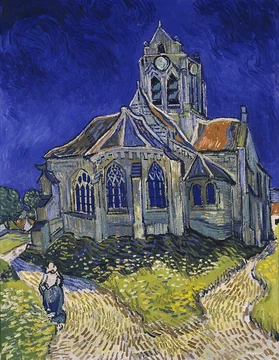
Giotto
Italian painter and architect of the Late Middle Ages.

Unidentified painter · Public domain
Giotto di Bondone (c. He worked during the Gothic and Proto-Renaissance period.
- field
- Painter and architect
- nationality
- Italian (Florentine)
- known_for
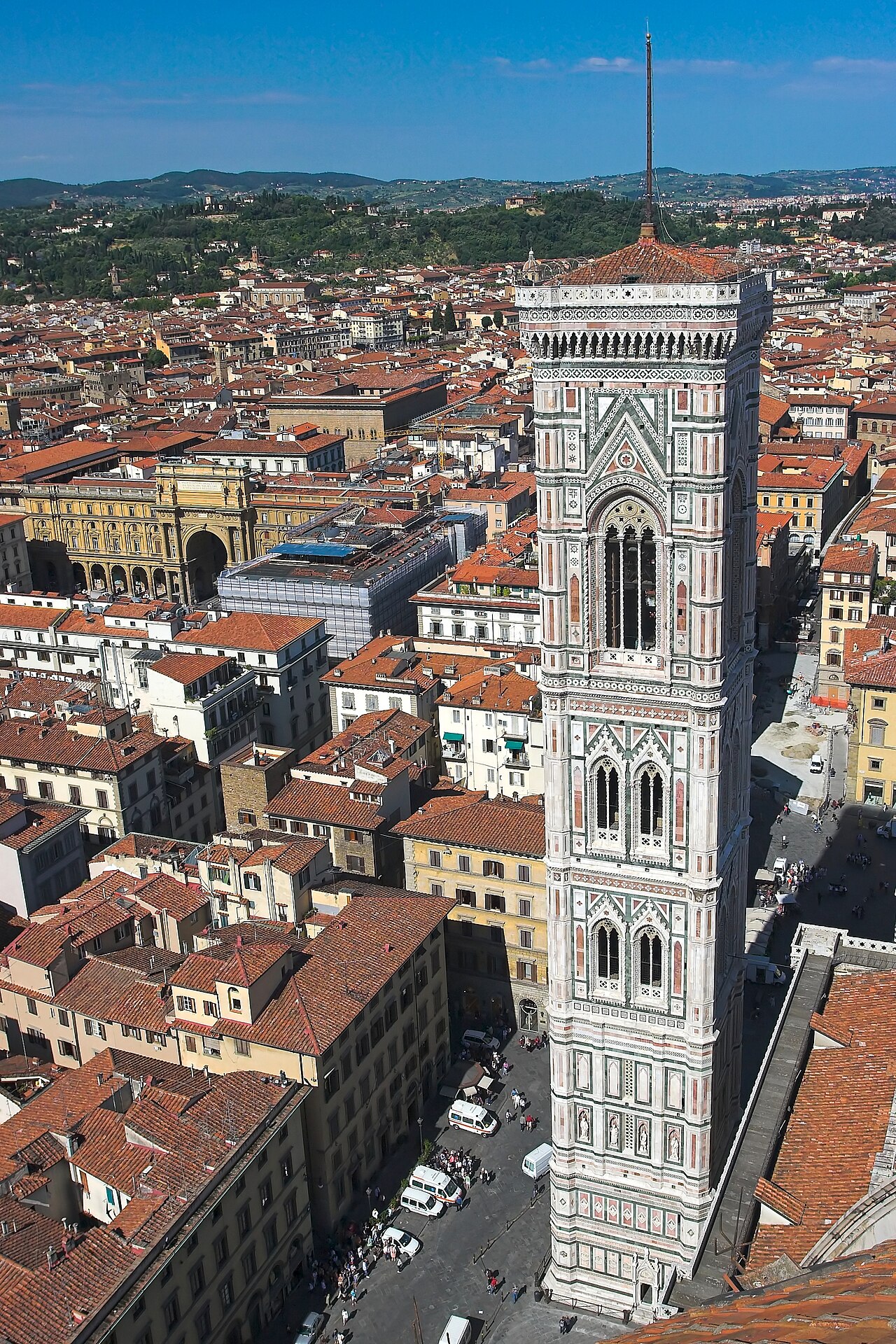
- Decoration of the Scrovegni Chapel (Arena Chapel), design of the campanile of Florence Cathedral
Lore & Background
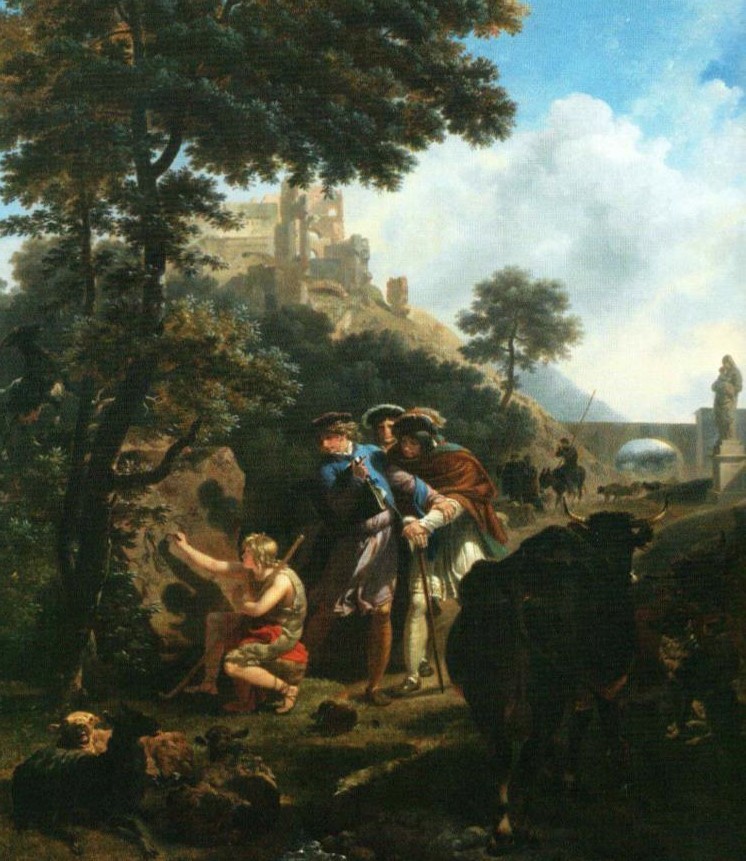
Tradition says Giotto was born in a farmhouse, possibly at Colle di Romagnano or Romignano, though recent research suggests he was born in Florence, the son of a blacksmith named Bondone. Giorgio Vasari's account that Giotto was a shepherd boy discovered by the painter Cimabue is considered a legend by many scholars, who cite earlier sources that suggest he was not Cimabue's pupil. Vasari also relates that when Pope Benedict XI sent a messenger asking for a drawing, Giotto drew a perfect red circle freehand, astonishing the Pope and his courtiers. He designed the Navicella mosaic for Old St. Peter's Basilica and painted the Badia Polyptych. The attribution of the fresco cycle of the Life of St.
Reader's Guide
Giotto's significance lies in his break from the Byzantine style, as described by Giorgio Vasari, who credited him with initiating 'the great art of painting as we know it today, introducing the technique of drawing accurately from life.' His contemporary, the banker and chronicler Giovanni Villani, wrote that Giotto was 'the most sovereign master of painting in his time, who drew all his figures and their postures according to nature.' The fresco cycle in the Scrovegni Chapel, depicting the Life of the Virgin and the Life of Christ, is his most influential work and a key monument of the Early Renaissance. Despite his fame, almost every other aspect of his life—birth date, birthplace, apprenticeship, order of works, and burial place—is subject to controversy.
Did You Know?
- Giotto's father was a blacksmith named Bondone.
- He designed the Navicella mosaic that decorated the facade of Old St. Peter's Basilica.
- Vasari recounts that Giotto drew a perfect red circle freehand to demonstrate his skill to Pope Benedict XI.
Giotto and the Florentine Line Tradition
Giorgio Vasari, writing in the sixteenth century, constructed what he and many after him regarded as the definitive narrative of Italian painting's stylistic evolution, and he placed Giotto at the very beginning of that story. According to Vasari's account, the trajectory runs from Giotto through the centuries to the Mannerist painters of Vasari's own day. Central to this narrative is the claim that a distinctly Florentine manner emerged, one rooted in disegno—that is, in line-based drawing—rather than in the colour-driven approach associated with Venice. This was not merely a technical preference but part of a much older classical argument about how art should relate to the natural world: whether the painter's primary duty is faithful reproduction or the elevation of nature toward an ideal. Vasari and his contemporaries, including Leon Battista Alberti, kept that argument alive, and it would echo through art theory right up to the arrival of Modernism in the nineteenth century. Yet Vasari's sweeping scheme, for all its influence, has been seriously questioned by later scholars.
The Artist Who Did Not Name His Own Style
One of the most striking things about Giotto's position in art history is that the very concept of style as a self-aware, deliberate artistic identity was largely foreign to his era. For painters working before the modern period, stylistic choices were probably made in a largely unselfconscious way; the maker did not sit down and decide on a personal brand. This stands in sharp contrast to artists in recent developed societies, who tend to be highly conscious—arguably over-conscious—of their own visual signature. Even the great classical critics and the sparse medieval writings on aesthetics never developed a robust theory of style in painting. Pliny, for instance, noticed shifts in how art was made but explained them through changes in technology and wealth rather than through any notion of artistic temperament. Vasari himself, when looking back at work before Giotto, attributed its perceived deficiencies to a lack of technical know-how and cultural sophistication. In other words, the Giotto we study today is, to a significant degree, a figure shaped by the analytical frameworks of those who came after him.
The Long Argument: Nature, Ideal, and the Slow Shift of Taste
The stylistic world into which Giotto was born was one in which the great classical question—how faithfully should art reproduce what the eye sees, and how much should it reshape that reality toward an ideal—was still being actively debated. Renaissance theorists such as Leon Battista Alberti inherited and extended this argument, treating the balance between naturalistic depiction and idealized form as the central problem of painting. That debate, rooted in the period Giotto helped inaugurate, would persist in art theory for centuries, only finally giving way with the arrival of Modernism in the nineteenth century. The pace at which visual style evolves has always varied enormously: in some traditions, such as prehistoric or Ancient Egyptian art, change is glacial; in others, particularly Modern art, it is rapid and often arrives in sudden jumps followed by longer periods of slower refinement. Giotto's era sits in the slower-moving register, where stylistic development is a gradual, almost imperceptible drift rather than a revolution.
The Historian's Invention: Naming What Giotto Never Named
The categories through which we discuss Giotto's work were not his own. Most stylistic periods and movements in art history were identified and named long after the fact by scholars, and the labels attached to older work would have been meaningless to the artists who produced it. Some of the most familiar terms in the art-historical vocabulary—Gothic, Baroque, Rococo—began life as words of mockery before they were reclaimed as neutral descriptors. Others, like Cubism, were consciously adopted by a small group of practitioners, though the word itself likely originated with critics. Giotto belongs firmly in the first category: the style he is said to represent was a retrospective construction. The dominant approach of classifying art primarily by style, which held sway through the nineteenth and early twentieth centuries, has come under sustained criticism in recent decades. Many art historians now actively avoid stylistic labels wherever possible, preferring other analytical frameworks. The Giotto we encounter in encyclopedias and textbooks is thus, in part, a product of a classificatory system that is itself under revision.
Gallery

Frequently Asked Questions
What artistic period did Giotto belong to?
He worked at the cusp of the Gothic era and the Proto-Renaissance, making him a threshold figure between two major stylistic movements. His naturalistic, emotionally expressive style marked a decisive break from earlier Byzantine conventions.
Did Giotto work in any medium other than painting?
Yes; he was also an architect, best known for designing the campanile (bell tower) of Florence Cathedral. His architectural contributions reinforced his reputation as a versatile creative mind in 14th-century Italy.
Why is Giotto considered so important in art history?
He is widely credited with introducing volume, human emotion, and narrative clarity into Western painting, effectively launching the visual language of the Renaissance. For that reason, he is often called the first great painter of the Italian Renaissance.
More in Visual Artists 1-24
Elsewhere in the Visual Artists universe
Spotted an error? Know more?
This is a living reference — every entry is fact-audited, and reader corrections feed straight into our audit queue. Suggest an edit · See this site's audit record