Henri Rousseau
French post-Impressionist painter in the Naïve or Primitive manner.

Henri-Julien-Félix Rousseau, French, 1844–1910 (1844–1910) – Artist/Maker (Frenc · Public domain
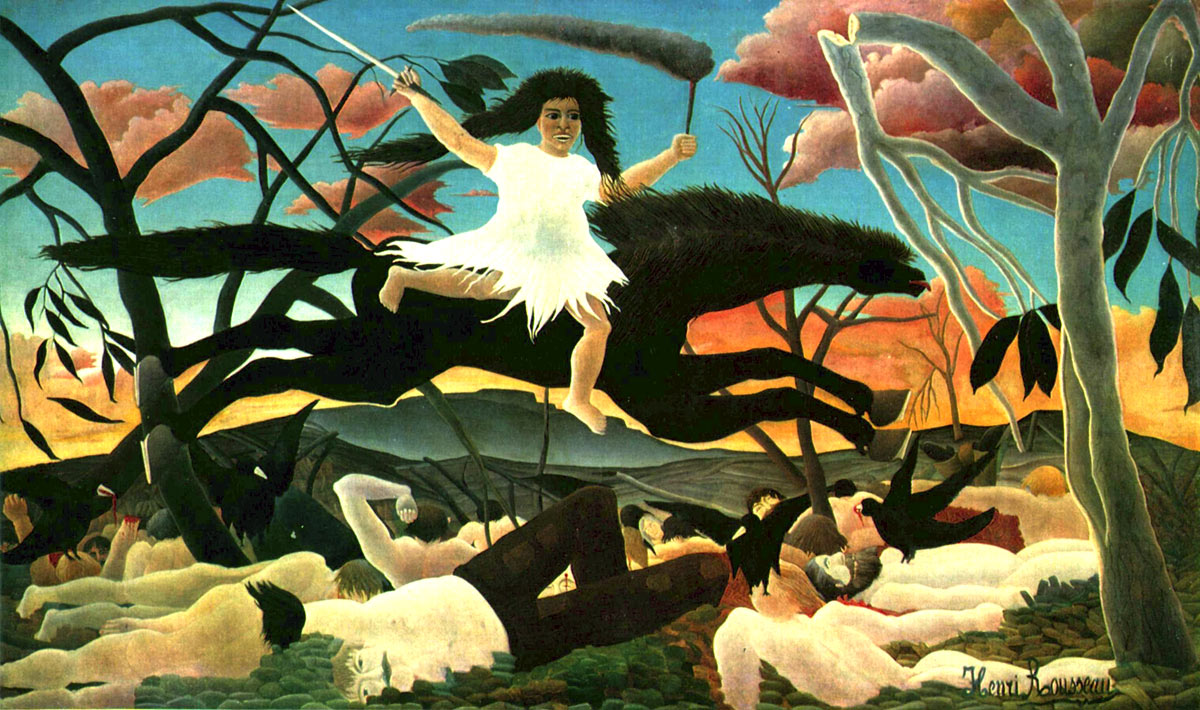
Henri Julien Félix Rousseau (21 May 1844 – 2 September 1910) was a French post-Impressionist painter in the Naïve or Primitive manner. He was also known as Le Douanier (the customs officer), a humorous description of his occupation as a toll and tax collector. He started painting seriously in his early forties; by age 49, he retired from his job to work on his art full-time. Ridiculed during his lifetime by critics, he came to be recognised as a self-taught genius whose works are of high artistic quality. Rousseau's work exerted an extensive influence on several generations of avant-garde artists.
- born
- 21 May 1844, Laval, Mayenne, France
- died
- 2 September 1910, Paris, France
- field
- Painting
- nationality
- French
- known_for
- Naïve or Primitive style, jungle scenes, post-Impressionism
Verified Timeline
Lore & Background
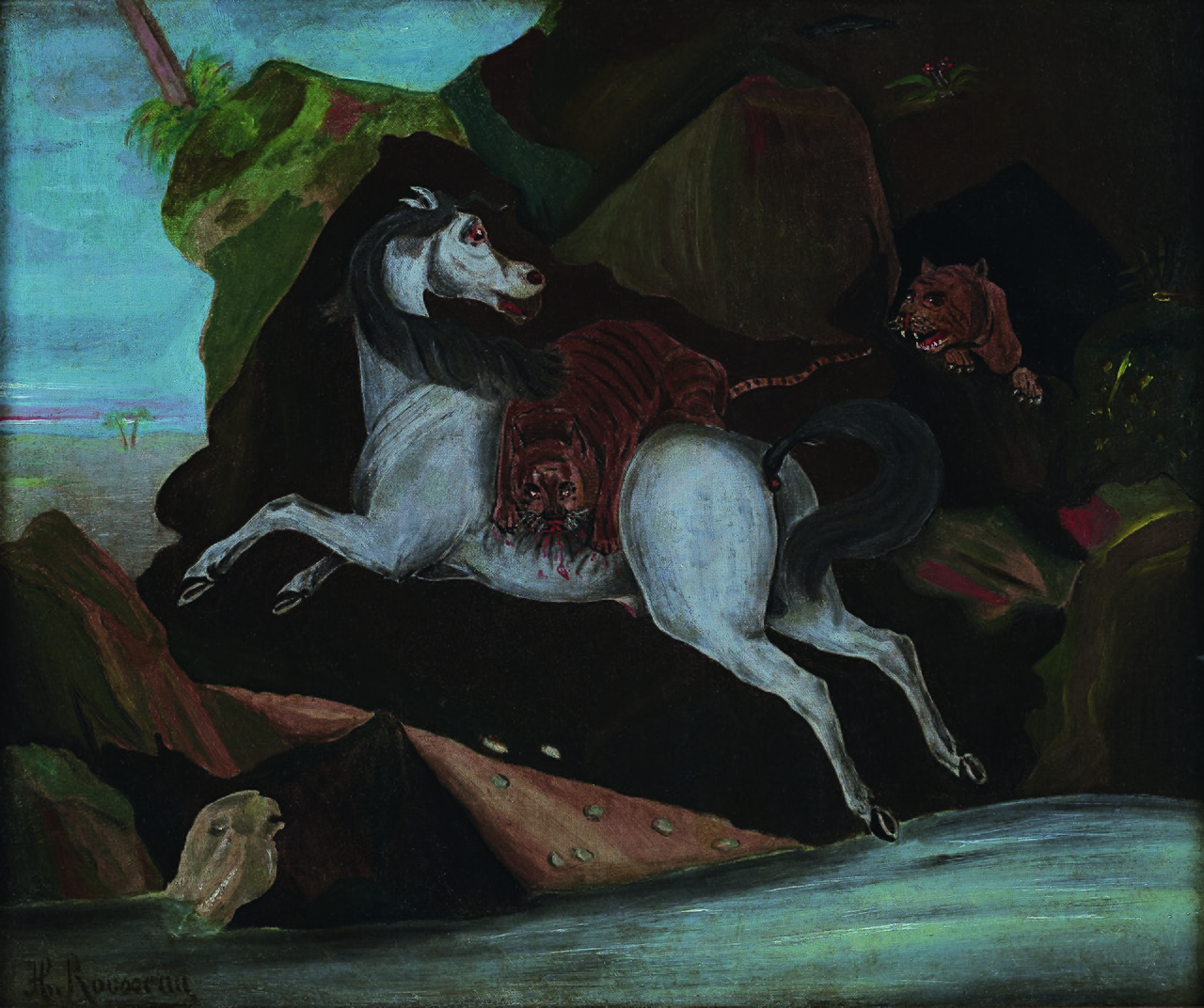
Rousseau was born in Laval, Mayenne, France, in 1844 into the family of a tinsmith; he was forced to work there as a young child. He attended Laval High School as a day student, and then as a boarder after his father became a debtor and his parents had to leave the town upon the seizure of their house. Though mediocre in some of his high school subjects, Rousseau won prizes for drawing and music. After high school, he worked for a lawyer and studied law, but 'attempted a small perjury and sought refuge in the army.' He served four years, starting in 1863. With his father's death, Rousseau moved to Paris in 1868 to support his widowed mother as a government employee. In 1868, he married Clémence Boitard, with whom he had six children. In 1871, he was appointed as a collector of the octroi of Paris, collecting taxes on goods entering Paris. Following Boitard's death in 1888, he married his second wife, Josephine Noury, in 1899. Rousseau did not travel and most of the jungles he painted were on display in the Natural History Museum and the botanical garden in Paris. From 1886, he exhibited regularly in the Salon des indépendants. Tiger in a Tropical Storm (Surprised!) was exhibited in 1891, and Rousseau received his first serious review when the young artist Félix Vallotton wrote: 'His tiger surprising its prey ought not to be missed; it's the alpha and omega of painting.' In 1893, Rousseau moved to a studio in Montparnasse where he lived and worked until his death in 1910. In 1897, he produced one of his most famous paintings, The Sleeping Gypsy. In 1905, his large jungle scene The Hungry Lion Throws Itself on the Antelope was exhibited at the Salon des indépendants near works by younger leading avant-garde artists such as Henri Matisse, in what is now seen as the first showing of The Fauves. In 1907, he was commissioned by artist Robert Delaunay's mother, Berthe, Comtesse de Delaunay, to paint The Snake Charmer. When Pablo Picasso happened upon a painting by Rousseau being sold on the street as a canvas to be painted over, the younger artist instantly recognised Rousseau's genius and went to meet him. In 1908, Picasso held a half serious, half burlesque banquet in his studio at Le Bateau-Lavoir in Rousseau's honour. Guests included Guillaume Apollinaire, Jean Metzinger, Juan Gris, Max Jacob, Marie Laurencin, André Salmon, Maurice Raynal, Daniel-Henri Kahnweiler, Leo Stein, and Gertrude Stein. Le Banquet Rousseau was described by US poet and literary critic John Malcolm Brinnin as 'one of the most notable social events of the twentieth century.' After Rousseau's retirement in 1893, he supplemented his small pension with part-time jobs and worked briefly at Le Petit Journal, where he produced a number of its covers. He exhibited his final painting, The Dream, in March 1910 at the Salon des Independants. In the same month Rousseau suffered a phlegmon in his leg. In August, when he was admitted to the Necker Hospital in Paris where his son had died, he was found to have gangrene in his leg. After an operation, he died from a blood clot on 2 September 1910. At his funeral, seven friends stood at his grave: the painters Paul Signac and Manuel Ortíz de Zárate; the artist couple Robert and Sonia Delaunay; the sculptor Constantin Brâncuși; Rousseau's landlord Armand Queval, and Guillaume Apollinaire, who wrote the epitaph Brâncuși put on the tombstone.
Reader's Guide
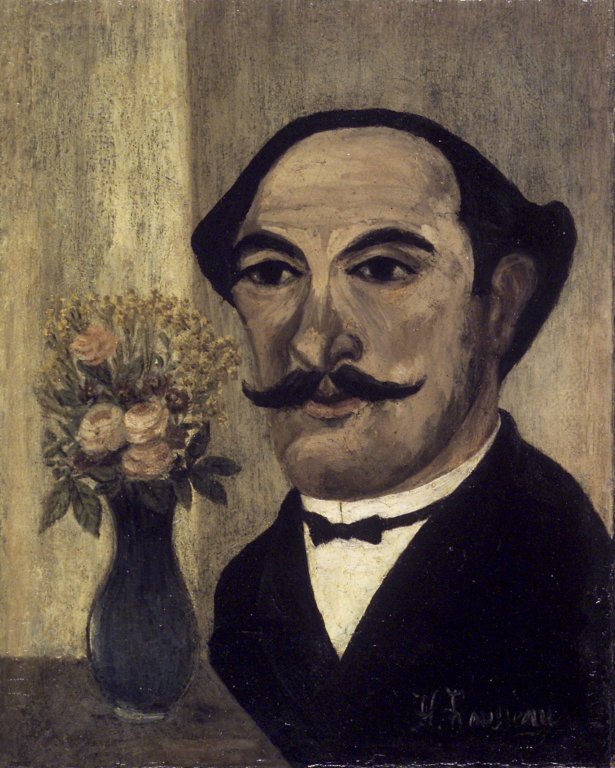
Rousseau had no academic training in any art. His paintings were at first ridiculed, but his naive primitive style influenced other contemporary artists. Aged 49, he applied for early retirement and devoted himself full-time to his painting portfolio. He only received a modest pension and supplemented his income by tutoring children in art. Rousseau claimed he had 'no teacher other than nature', although he admitted he had received 'some advice' from two established Academic painters, Félix Auguste Clément, and Jean-Léon Gérôme. His best-known paintings depict jungle scenes, even though he never left France or saw a jungle. Stories spread by admirers that his army service included the French intervention in Mexico are unfounded. His inspiration came from illustrations in children's books and the botanical gardens in Paris, as well as tableaux of taxidermy wild animals. During his term of service, he had also met soldiers who had survived the French expedition to Mexico, and he listened to their stories of the subtropical country they had encountered. To the critic Arsène Alexandre, he described his frequent visits to the Jardin des Plantes: 'When I go into the glass houses and I see the strange plants of exotic lands, it seems to me that I enter into a dream.' Along with his exotic scenes there was a concurrent output of smaller topographical images of the city and its suburbs. He claimed to have invented a new genre of portrait landscape, which he achieved by starting a painting with a specific view, such as a favourite part of the city, and then depicting a person in the foreground, most notably his early Myself, Portrait-Landscape (1890). Rousseau's flat, seemingly childish style was disparaged by many critics; people often were shocked by his work or ridiculed it. His ingenuousness was extreme, and he always aspired, in vain, to conventional acceptance. Many observers commented that he painted like a child, but the work shows sophistication with his particular technique. Rousseau's work exerted an extensive influence on several generations of avant-garde artists, including Pablo Picasso, Jean Hugo, Fernand Léger, Jean Metzinger, Max Beckmann, and the Surrealists. In 1911, a retrospective exhibition of Rousseau's works was shown at the Salon des Indépendants. His paintings were also shown at the first exhibition of Der Blaue Reiter. Rousseau's art was exhibited as naïve art in salons and commercial art galleries alongside art by artists Rousseau did not personally know. Rousseau was posthumously promoted by the art dealer Wilhelm Uhde and a collection of naïve art is today curated by the Musée Maillol.
Did You Know?
- Rousseau was known as Le Douanier (the customs officer) because he worked as a toll and tax collector.
- He never left France; his jungle scenes were inspired by the Natural History Museum and botanical garden in Paris.
- In 1908, Pablo Picasso held a banquet in Rousseau's honor at Le Bateau-Lavoir, attended by Guillaume Apollinaire, Gertrude Stein, and others.
- Rousseau's final painting, The Dream, was exhibited in March 1910, the same month he suffered a phlegmon in his leg.
- At his funeral, seven friends stood at his grave, including Paul Signac, Constantin Brâncuși, and Guillaume Apollinaire, who wrote the epitaph.
From Tinsmith's Son to Tax Collector
Rousseau was born in 1844 in Laval, Mayenne, to a tinsmith's family. Poverty defined his youth; he labored as a child, and when his father's debts led to the seizure of their home, the boy was sent to board at Laval High School. There, despite mediocre grades in most subjects, he repeatedly won prizes in drawing and music. After school he worked for a lawyer and studied law, but a small act of perjury sent him into the army, where he served four years from 1863. His father's death brought him to Paris in 1868 to support his widowed mother as a government employee. He married Clémence Boitard that year, and they raised six children together. In 1871 he was appointed to collect the octroi—the tax on goods entering the city—a post that gave him the nickname Le Douanier. After Clémence died in 1888, he married Josephine Noury in 1899, though by then his real calling had already begun to pull him away from the desk.
A Jungle Built from Museum Glass
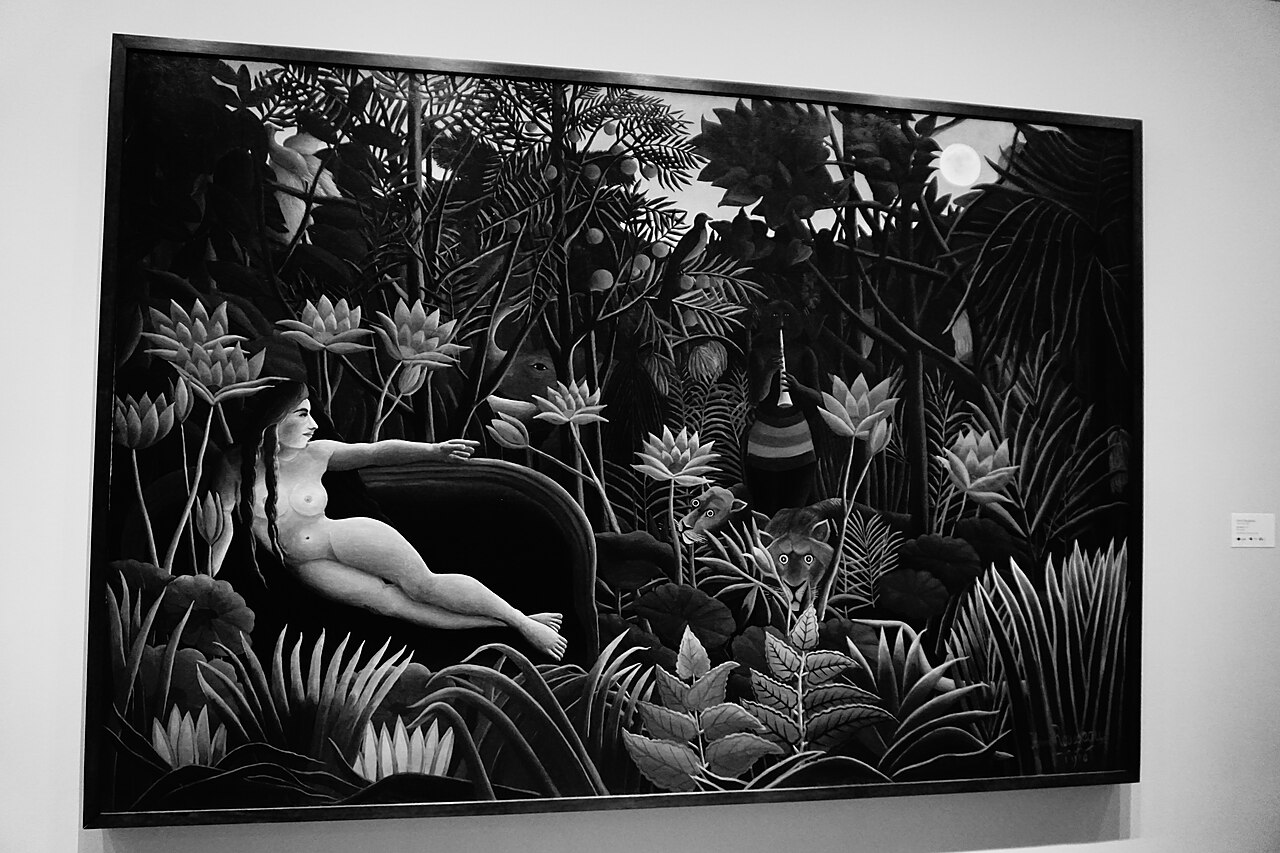
Rousseau never received formal art instruction, nor did he travel to the exotic lands that filled his canvases. The lush jungles and strange creatures he painted were assembled from specimens and illustrations at Paris's Natural History Museum and the city's botanical garden. He began painting seriously only in his early forties, and from 1886 he exhibited each year at the Salon des Indépendants, where his work was placed unobtrusively but slowly gathered a devoted following. In 1891, Tiger in a Tropical Storm (Surprised!) drew his first serious review, when the young painter Félix Vallotton called it the alpha and omega of painting. Around this time he moved into a Montparnasse studio where he would live and work until his death. By 1897 he had produced The Sleeping Gypsy, now at the Barnes Foundation. In 1905, his large jungle scene The Hungry Lion Throws Itself on the Antelope hung near works by Henri Matisse and other young radicals in what is now seen as the first showing of the Fauves. In 1907 the Comtesse de Delaunay commissioned The Snake Charmer, and in March 1910 he displayed his final painting, The Dream, at the Salon des Indépendants.
Picasso's Banquet and the Avant-Garde's Embrace
The turning point in Rousseau's public standing arrived when Pablo Picasso, passing a street vendor, spotted one of the older man's paintings offered as a bare canvas to be scraped and repainted. Struck by what he saw, Picasso sought out Rousseau and, in 1908, hosted a half-serious, half-comical banquet in his Le Bateau-Lavoir studio in the painter's honor. The guest list read like a who's-who of the emerging avant-garde: Guillaume Apollinaire, Jean Metzinger, Juan Gris, Max Jacob, Marie Laurencin, André Salmon, Maurice Raynal, Daniel-Henri Kahnweiler, and both Leo and Gertrude Stein. The writer John Malcolm Brinnin later called the gathering one of the most notable social events of the twentieth century, observing that its fame grew from uniting individuals whose separate creative forces would radiate across the art world for generations. André Salmon, recalling the scene years later, described the studio as the place where the Blue Period ended, the Rose Period bloomed, and the Demoiselles d'Avignon paused in their dance. Rousseau's proximity to Matisse's work at the 1905 Salon may even have contributed to the very name given to the Fauves, anchoring him at the heart of modernist ferment.
The Last Months and a Grave Marked by Giants
After retiring from his tax-collecting post in 1893, Rousseau supplemented a small pension with part-time work, including a brief stint producing covers for the newspaper Le Petit Journal. In the final months of his life he painted Tropical Forest with Monkeys, now in the John Hay Whitney collection, in which his signature anthropomorphised primates hold what appear to be fishing poles, suggesting a longing to escape the grinding jungle of Parisian civilisation. He displayed his last painting, The Dream, at the Salon des Indépendants in March 1910. That same month a phlegmon developed in his leg; by August he was admitted to the Necker Hospital—the same institution where his son had died—and gangrene was found. Despite surgery, a blood clot took his life on 2 September 1910. Only seven friends stood at his grave: the painters Paul Signac and Manuel Ortíz de Zárate, the artist couple Robert and Sonia Delaunay, the sculptor Constantin Brâncuși, his landlord Armand Queval, and Guillaume Apollinaire, who wrote the epitaph Brâncuși placed on the tombstone. Ridiculed by critics throughout his career, Rousseau was ultimately recognised as a self-taught genius whose work exerted extensive influence on several generations of avant-garde artists.
Gallery
Frequently Asked Questions
Who is Henri Rousseau?
Henri Julien Félix Rousseau (1844–1910) was a French painter associated with post-Impressionism who is best remembered for his lush jungle scenes and dreamlike landscapes. He is widely regarded as a self-taught artist who developed a distinctive, untrained visual language.
What painting style is Henri Rousseau associated with?
Rousseau worked in what is commonly called the Naïve or Primitive manner, characterized by flat planes of color, bold outlines, and a childlike sense of wonder. His approach rejected the academic conventions of his era in favor of a more intuitive, personal rendering of nature.
What was Henri Rousseau's day job before he painted full-time?
He spent most of his adult life working as a toll and tax collector in Paris, a role that earned him the affectionate nickname Le Douanier (the Customs Officer). He did not begin painting seriously until his early forties, long after establishing that career.
How did critics and the public treat Henri Rousseau during his lifetime?
Contemporary critics largely mocked his work, dismissing it as amateurish and unsophisticated. It was only after his death in 1910 that his reputation was rehabilitated and he came to be celebrated as a visionary self-taught genius.
Why is Henri Rousseau considered important in art history?
His unorthodox, untrained approach to composition and color opened the door for later avant-garde movements that valued personal expression over technical polish. Several generations of twentieth-century artists cited his jungle paintings as a foundational influence on modern and surrealist practice.
More in Visual Artists 1-24
Elsewhere in the Visual Artists universe
Spotted an error? Know more?
This is a living reference — every entry is fact-audited, and reader corrections feed straight into our audit queue. Suggest an edit · See this site's audit record