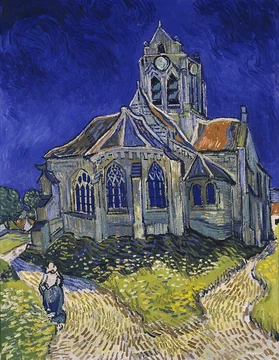
Henri de Toulouse-Lautrec
French Post-Impressionist painter of Parisian nightlife and brothels.

Didier Descouens · Public domain
His immersion in the colourful and theatrical life of Paris's Belle Époque in the late 19th century allowed him to produce popular works of art from decadent affairs. Born into the aristocracy, he broke both his legs during adolescence, leaving him with a stunted appearance, and he later developed an affinity for brothels and prostitutes that directed the subject matter for many of his works.
- field
- Painting, printmaking, draughtsmanship, caricature, illustration
- nationality
- French
- known_for
- Depictions of Parisian bohemian life, especially brothels and cabarets like the Moulin Rouge
Lore & Background
He was drawn to Montmartre, an area he rarely left over the next 20 years. He also contributed illustrations to the magazine Le Rire in the mid-1890s.
Reader's Guide
Toulouse-Lautrec is among the painters described as Post-Impressionists, alongside Paul Cézanne, Vincent van Gogh, Paul Gauguin, and Georges Seurat. His work records details of the late-19th-century bohemian lifestyle in Paris, particularly the lives of prostitutes and cabaret performers. He created about a hundred drawings and fifty paintings inspired by brothel life, declaring that models were 'stuffed dolls' while prostitutes were 'alive.' His posters for the Moulin Rouge and other venues became iconic, and he supported Oscar Wilde during Wilde's imprisonment in Britain. His legacy lies in his unflinching portrayal of Parisian underclass and nightlife, influencing later art and popular culture.
Did You Know?
- Toulouse-Lautrec's legs stopped growing after he fractured both femurs as a teenager, leaving him at 1.52 m (5 ft 0 in) with an adult torso and child-sized legs.
- He painted the portrait of Oscar Wilde the same year as Wilde's trial for gross indecency.
The Body That Shaped the Art
Toulouse-Lautrec entered the world in 1864 as the firstborn of Count Alphonse de Toulouse-Lautrec Montfa and Adèle Zoë Tapié de Celeyran, born at a family home in Albi, southern France. His lineage traced back to the Counts of Toulouse and the Vicomte de Lautrec, and he carried the courtesy title of Comte. Yet the aristocratic bloodline carried a darker inheritance: his parents were first cousins, their mothers being sisters, and congenital health problems have long been linked to that inbreeding. At thirteen he shattered his right femur; at fourteen the same fate struck his left leg. The fractures never set correctly. Contemporary medical opinion points to an unidentified genetic condition—sometimes labelled pycnodysostosis or colloquially 'Toulouse-Lautrec Syndrome'—or a related disorder such as osteopetrosis, achondroplasia, or osteogenesis imperfecta. His legs stopped growing entirely at a height of just 1.52 metres, leaving him with a fully developed adult torso perched above child-sized limbs. His mother, desperate to help, sent him to thermal baths at Amélie-les-Bains and consulted physicians in search of a remedy. The physical limitation that defined his silhouette would, paradoxically, channel his gaze downward and inward, toward the intimate, unglamorous corners of Parisian life he would immortalise.
Montmartre and the Making of an Artist
After early sketching in exercise books under the informal tutelage of René Princeteau—a friend of his father whose speciality was painting horses—Toulouse-Lautrec's talent caught the eye of Princeteau during a sojourn in Nice. The painter convinced the young man's parents to let him return to Paris in 1882 to study under the established portraitist Léon Bonnat. His mother, ambitious for her son's social standing, leveraged the family's aristocratic connections to secure his place in Bonnat's studio. That placement dropped him squarely into Montmartre, the hilltop quarter where artists, writers, and philosophers mingled in a bohemian ferment he would rarely leave for the next two decades. When Bonnat departed for a new post, Toulouse-Lautrec transferred to the studio of Fernand Cormon, where he remained for five years. Cormon's looser pedagogy encouraged his pupils to roam the streets hunting for subjects. It was in this freer environment that he met Émile Bernard and Vincent van Gogh, and that a friend allegedly arranged his first encounter with a prostitute, an experience that prompted his earliest painting of a Montmartre woman, rumoured to be Marie-Charlet.
Cabarets, Brothels, and the Urban Underclass
Toulouse-Lautrec threw himself into the theatrical, often sordid underbelly of Belle Époque Paris with an intensity that defined his entire output. He frequented brothels and developed a deep fascination with the lives of prostitutes and the broader urban underclass, weaving those figures into his canvases with an unflinching, almost documentary eye. His growing alcoholism deepened his immersion in these circles, and fellow painter Édouard Vuillard later observed that while Lautrec did engage in sexual relations with prostitutes, the true motivation behind his behaviour ran far deeper than physical desire. He exhibited early work at the Mirliton cabaret run by Aristide Bruant as far back as 1885, and in the mid-1890s he supplied illustrations for the satirical magazine Le Rire. His personal life in these years was equally turbulent: in 1885 he met Suzanne Valadon, painted several portraits of her, and championed her ambitions as an artist. They were believed to have been lovers, and she reportedly wished to marry him. When the relationship collapsed, Valadon attempted suicide in 1888. Through it all, his work served as a vivid, unvarnished record of late-nineteenth-century bohemian Paris in all its decadence and colour.
Recognition, Loyalty, and the Post-Impressionist Circle
Toulouse-Lautrec's path to wider recognition was neither swift nor uneventful. In 1887 he showed in Toulouse under the pseudonym 'Tréclau,' a playful inversion of his family name, and later exhibited in Paris alongside Van Gogh and Louis Anquetin. A genuine breakthrough came in 1888 when the Belgian critic Octave Maus invited him to present eleven works at the Les XX exhibition in Brussels. That same year, Theo van Gogh purchased his painting Poudre de Riz for 150 francs on behalf of the Goupil & Cie gallery. From 1889 through 1894 he became a regular presence at the Salon des Indépendants, producing landscapes of Montmartre and en plein air studies in the garden of Monsieur Pere Foret. His loyalty to his peers was fierce: at a 1890 banquet in Brussels, when the artist Henry de Groux disparaged Van Gogh's work, Toulouse-Lautrec challenged him to a duel. Paul Signac pledged to continue the fight for Van Gogh's honour even if Lautrec fell. De Groux ultimately apologised and withdrew. Toulouse-Lautrec is now grouped among the Post-Impressionists alongside Cézanne, Van Gogh, Gauguin, and Seurat, a loose constellation of painters who reshaped modern art. He died on 9 September 1901, barely thirty-seven.
Gallery
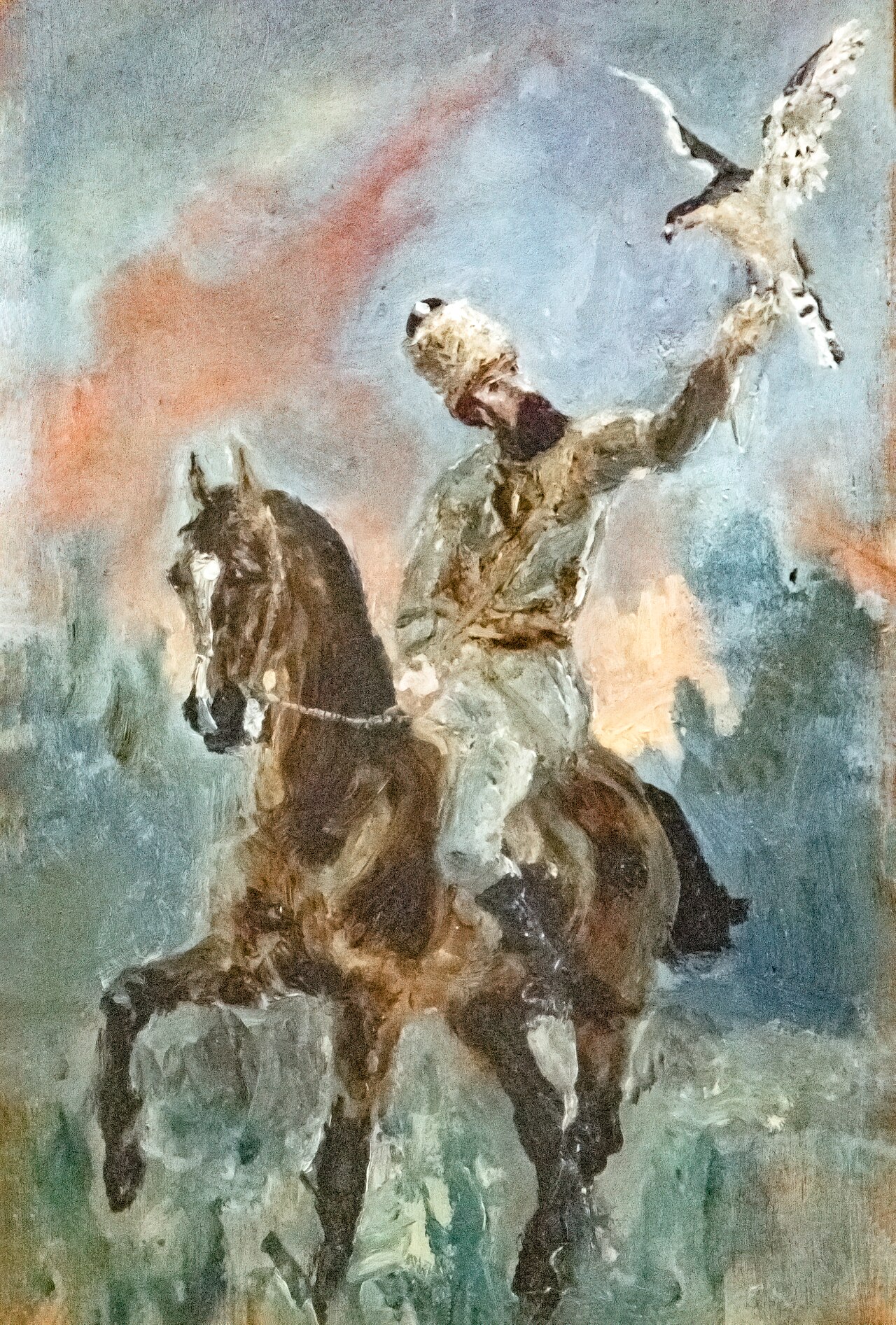
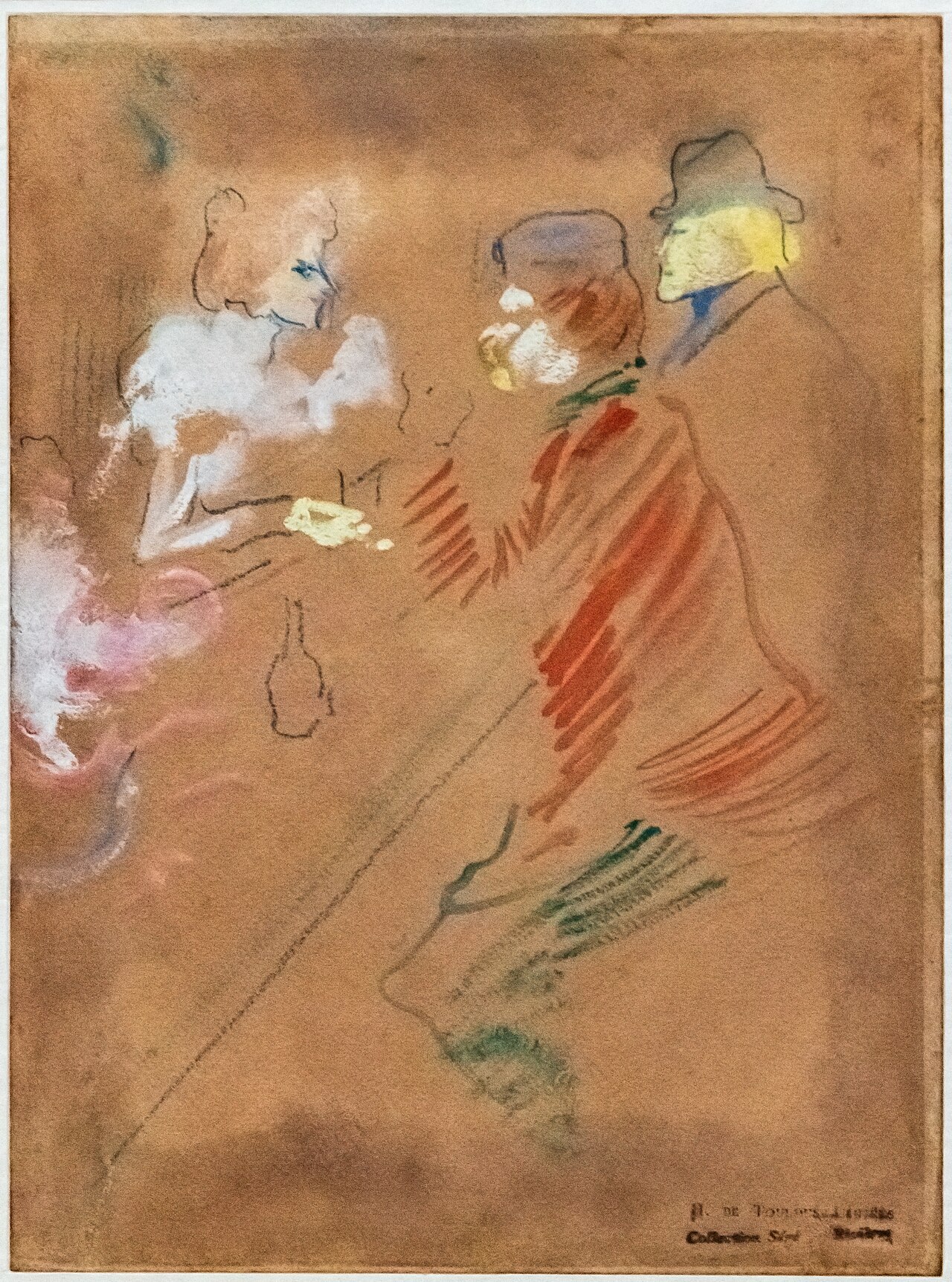
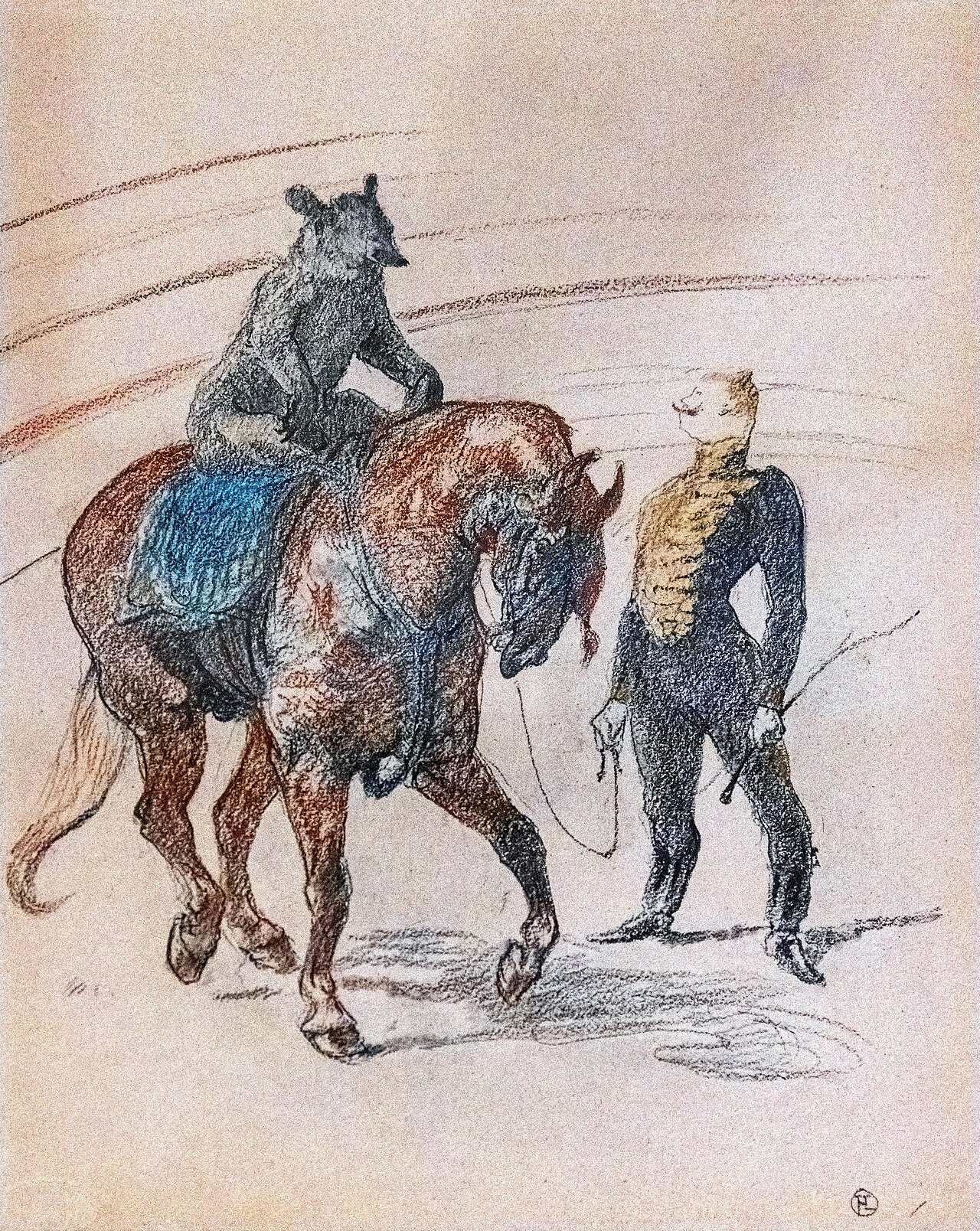
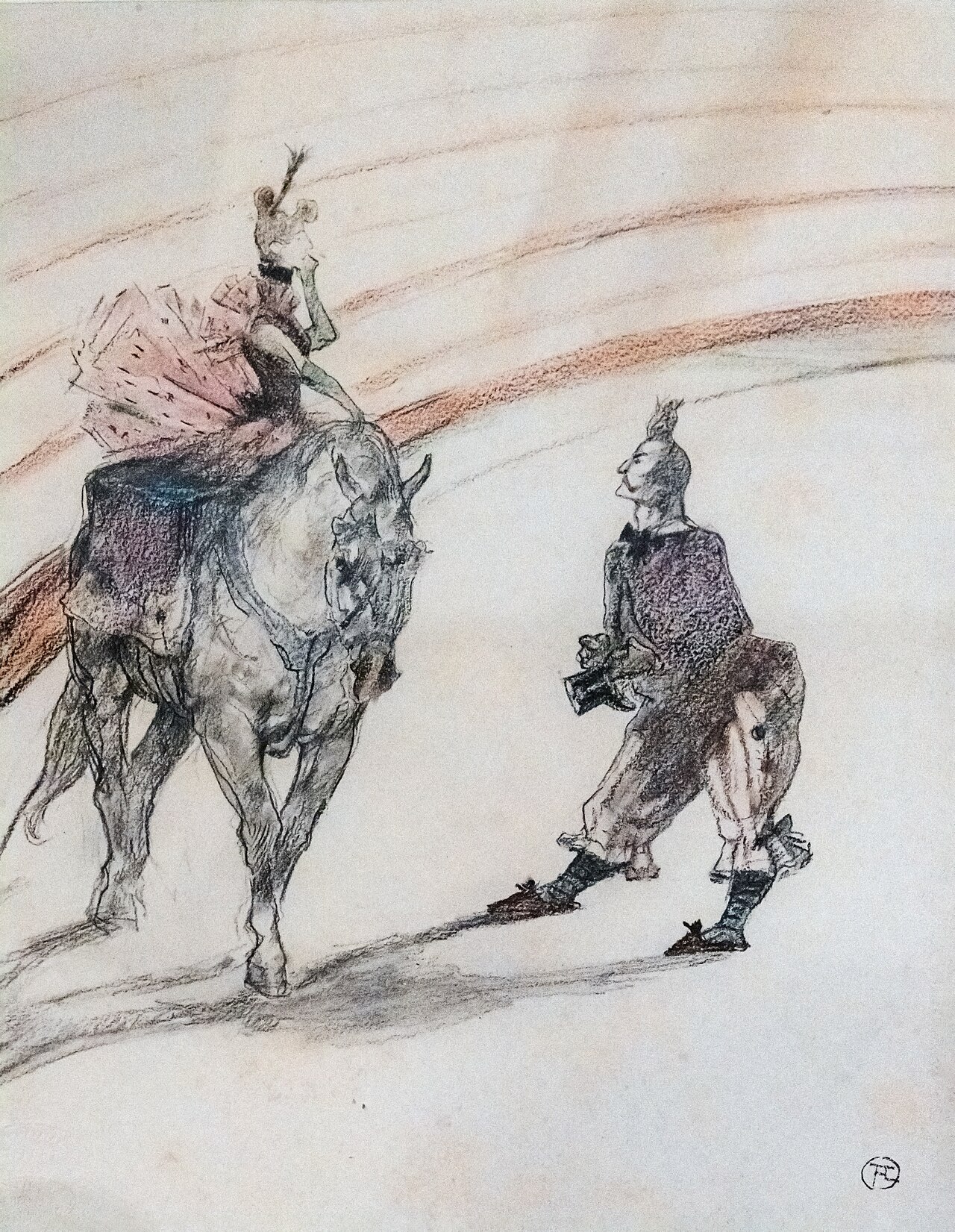
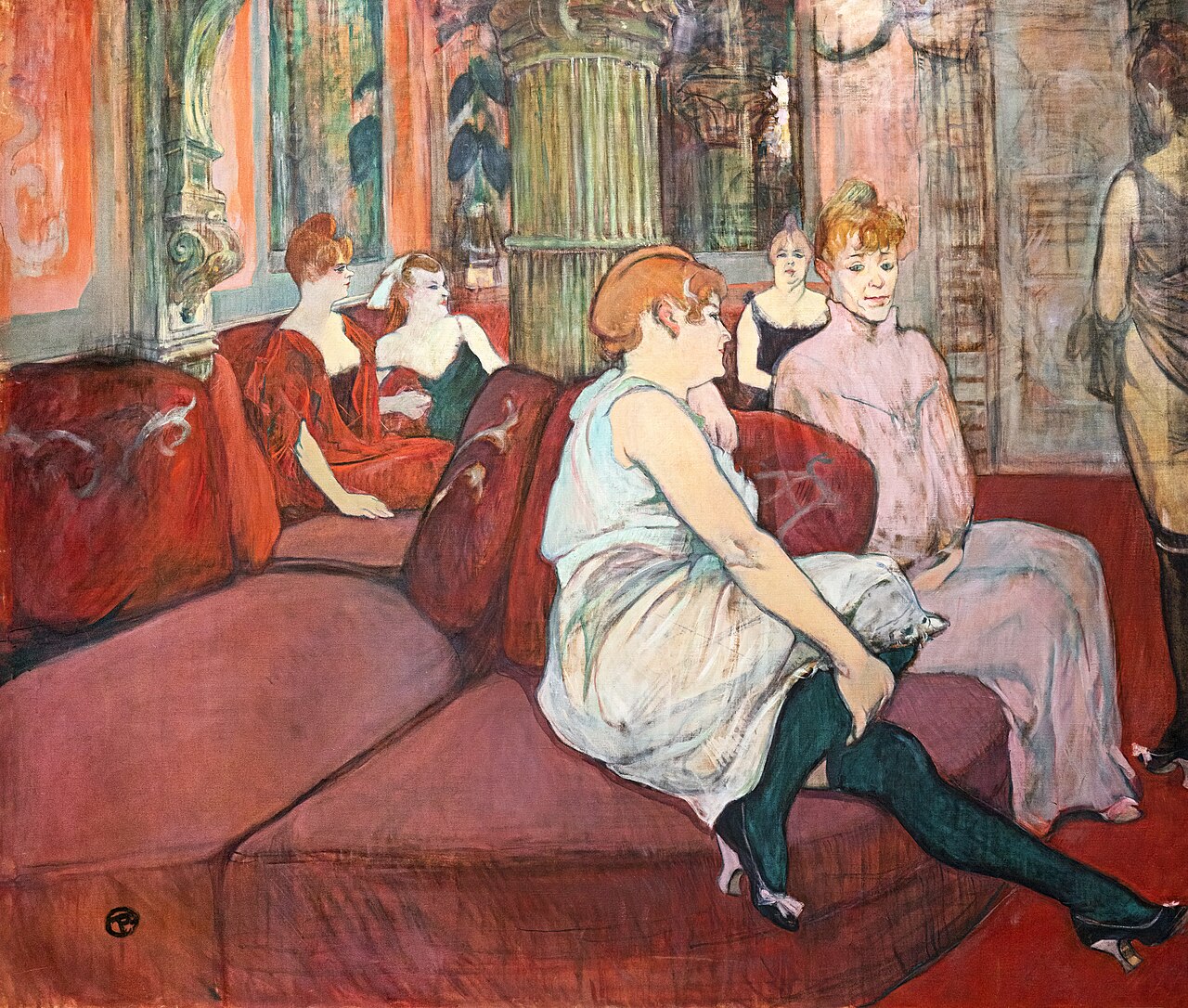
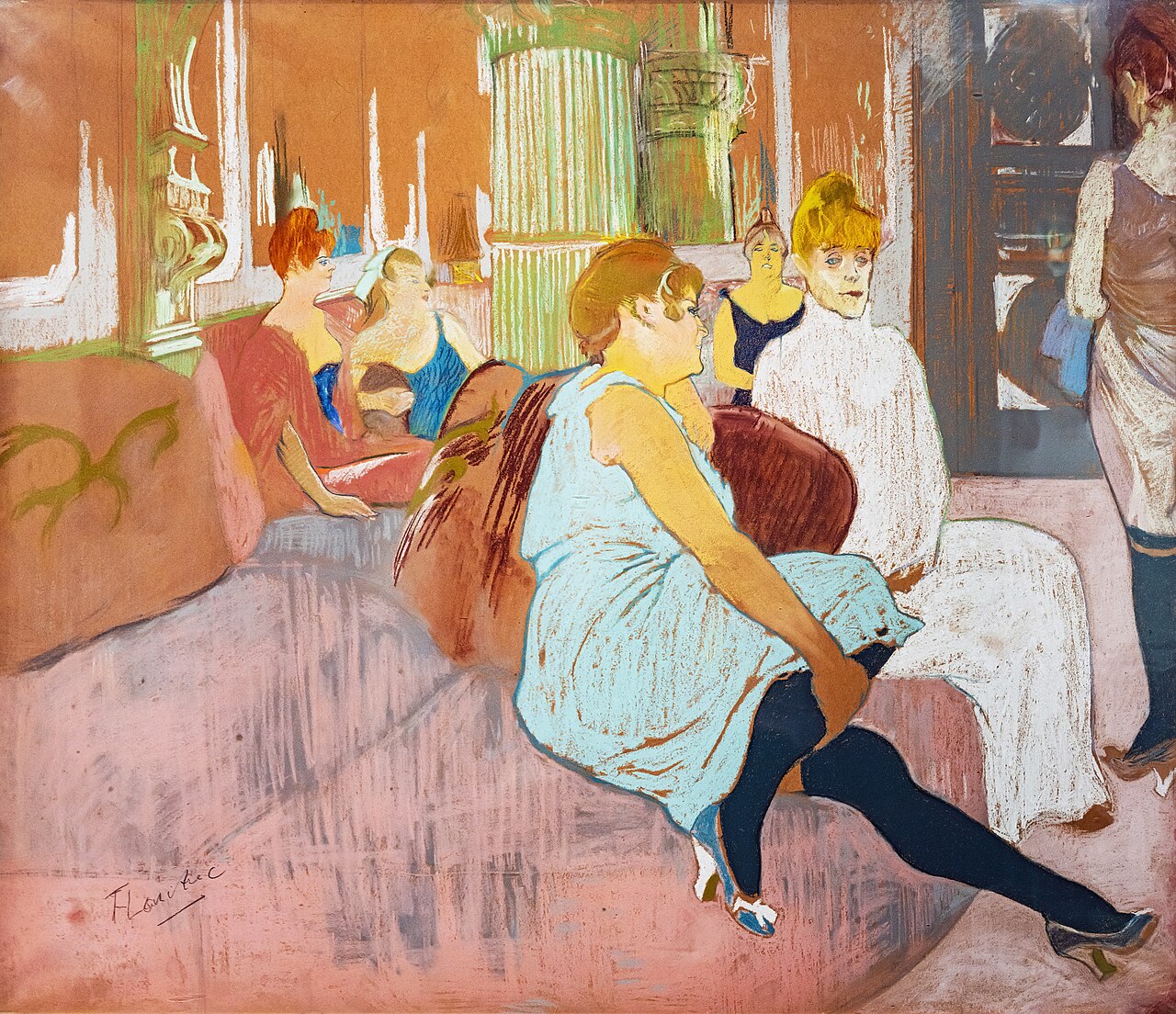
Frequently Asked Questions
What subjects is Toulouse-Lautrec most associated with?
His work centers on the bohemian and theatrical world of late-19th-century Paris, particularly the performers and patrons of cabarets like the Moulin Rouge and the women of the city's brothels. These settings gave him a rich cast of characters to render in his distinctive, expressive style.
Why was Toulouse-Lautrec notably short in stature?
As a teenager he suffered two separate leg fractures that healed poorly, permanently stunting his growth and leaving him with a hunched, disproportionate appearance. This physical limitation may have steered him away from outdoor painting and toward the intimate interiors of Parisian entertainment venues.
What is the story behind Toulouse-Lautrec and the Moulin Rouge?
He was a devoted regular at the famous Montmartre cabaret, spending long hours sketching and painting its singers, dancers, and audience. Many of his most celebrated posters and lithographs feature performers such as La Goulue and Jane Avril who worked there.
Why is Toulouse-Lautrec considered important in art history?
His bold linework, flattened compositions, and unflinching portrayal of everyday Parisian life helped bridge the gap between Impressionism and the more stylized modern art that followed. He also demonstrated that commercial media like advertising posters could carry genuine artistic weight.
More in Visual Artists 1-24
Elsewhere in the Visual Artists universe
Spotted an error? Know more?
This is a living reference — every entry is fact-audited, and reader corrections feed straight into our audit queue. Suggest an edit · See this site's audit record