Rembrandt
Dutch Golden Age painter, printmaker, and draughtsman of wide-ranging subjects.
Rembrandt Harmenszoon van Rijn, known simply as Rembrandt, lived from 15 July 1606 to 4 October 1669. He was a painter, printmaker, and draughtsman during the Dutch Golden Age and is widely regarded as one of the most important visual artists in Western art history. About three hundred of his paintings, three hundred etchings, and several hundred drawings survive today.
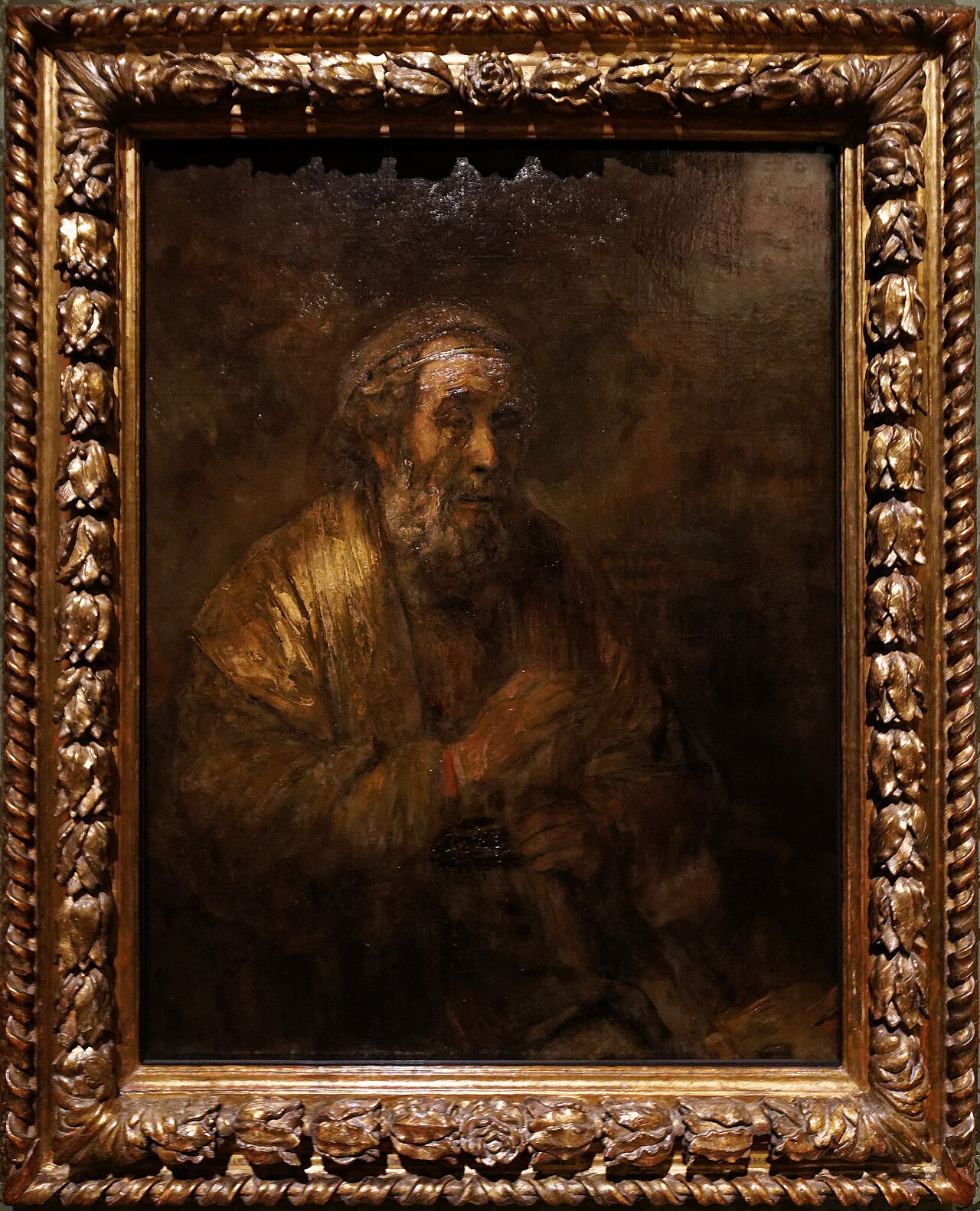
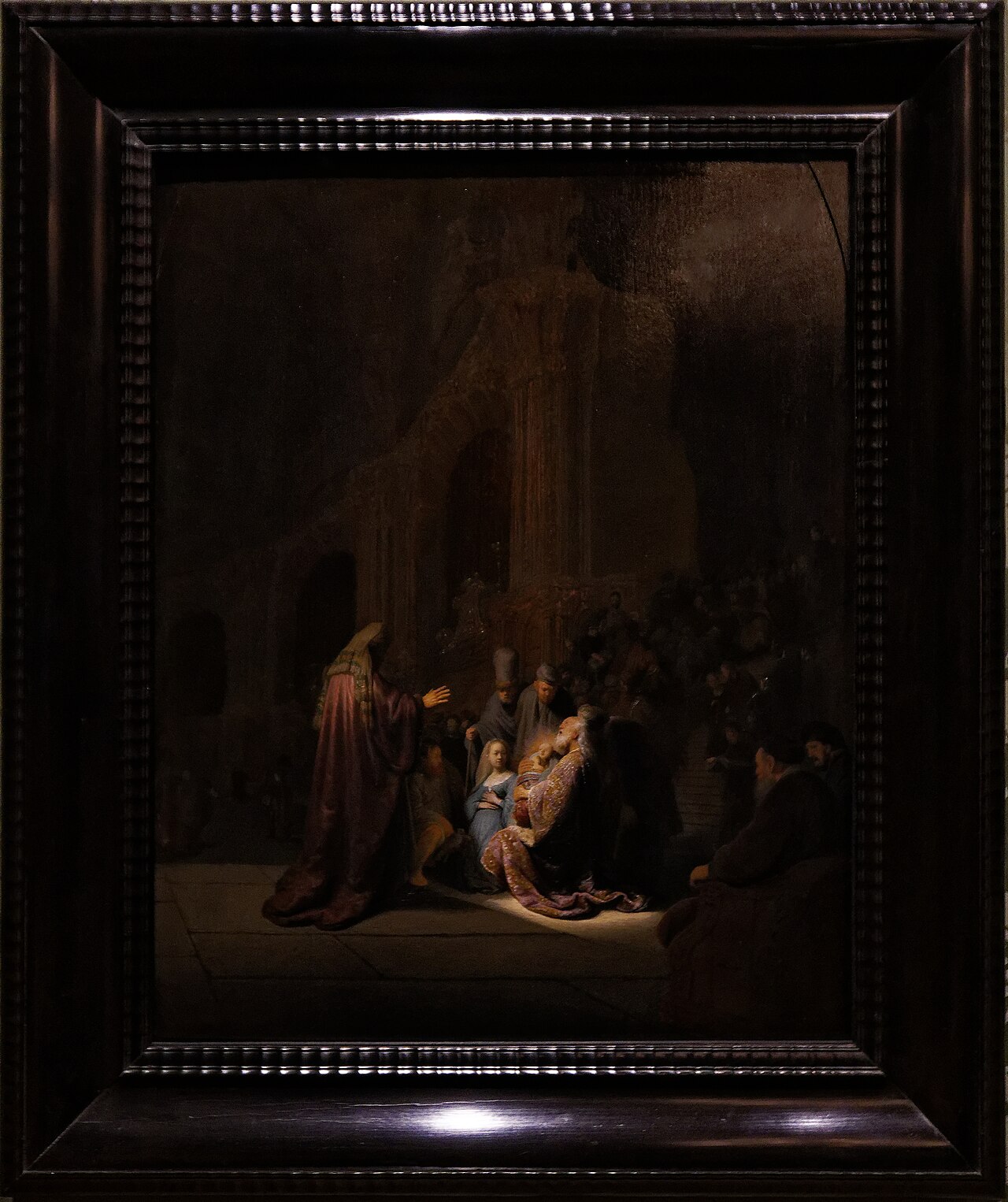
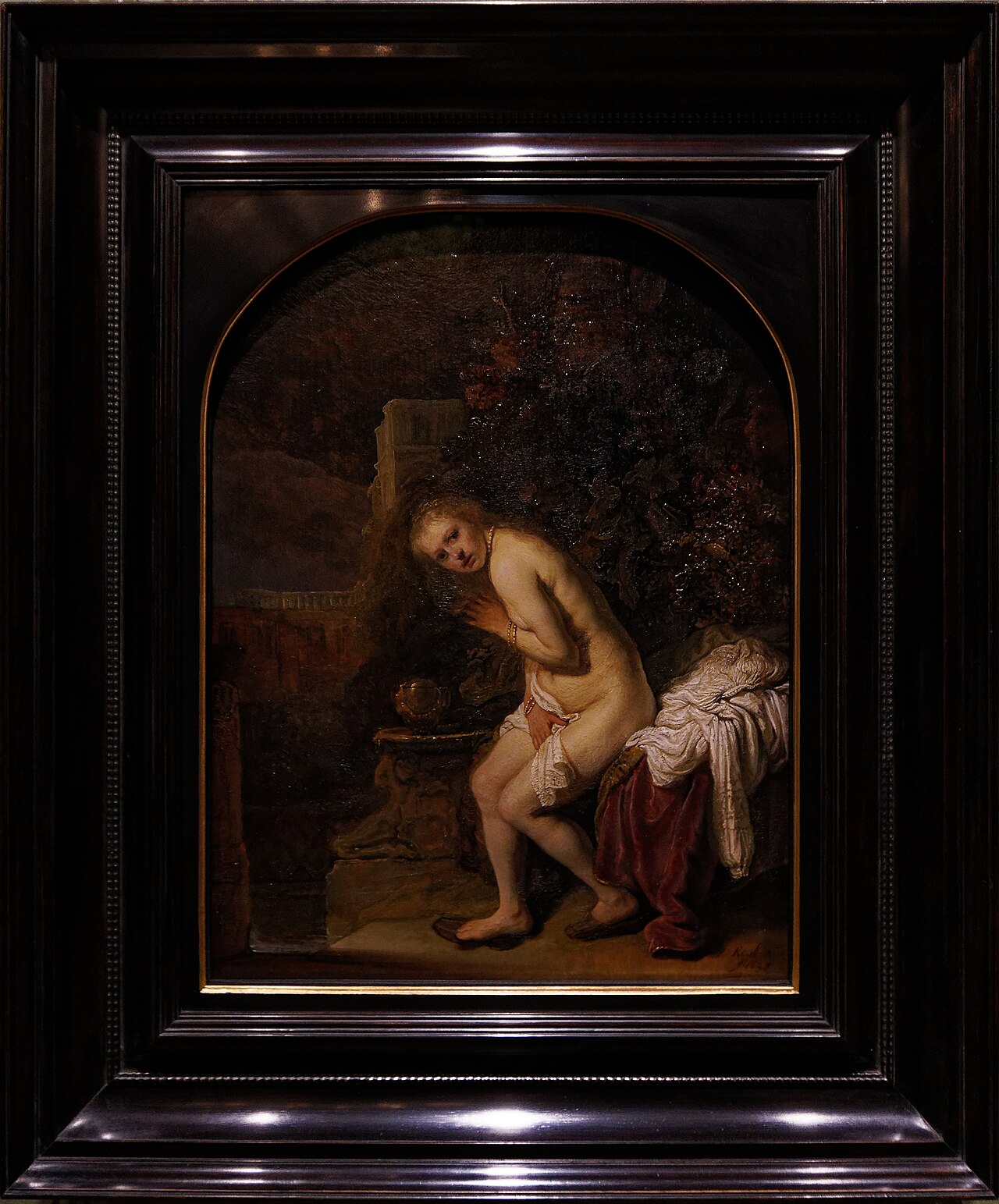
Unlike many of his Dutch contemporaries in the 17th century, Rembrandt worked in a broad variety of styles and subjects. He painted portraits and self-portraits, landscapes, genre scenes, allegorical and historical pieces, biblical and mythological stories, and studies of animals. He never traveled outside the Netherlands, but the work of Italian Old Masters—along with Dutch and Flemish artists who had studied in Italy—strongly influenced him.
He was born on 15 July 1606 in Leiden, in what is now the Netherlands. He was the ninth child of Harmen Gerritszoon van Rijn, a miller, and Neeltgen Willemsdochter van Zuijtbrouck, a baker’s daughter. His mother was Catholic; his father belonged to the Dutch Reformed Church. Religion appears often in his work, and the religious tensions of his time make his own faith a point of interest.
Rembrandt attended a Latin school as a boy. In 1620 he enrolled at Leiden University, but he preferred painting and soon apprenticed with Jacob van Swanenburg for three years. He then spent six months with history painter Pieter Lastman in Amsterdam, followed by a few months with Jacob Pynas in 1625. According to Simon van Leeuwen, Rembrandt also studied under Joris van Schooten before starting his own workshop.
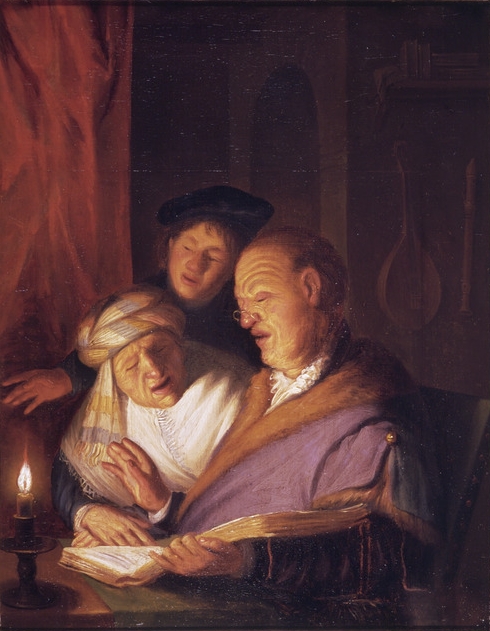
In 1625, Rembrandt opened a studio in Leiden with his friend and colleague Jan Lievens. He began taking students in 1627, including Gerrit Dou and Isaac de Jouderville. The first recorded buyer of a Rembrandt painting was Joan Huydecoper in 1628. In 1629, statesman Constantijn Huygens discovered him and helped secure commissions from the court in The Hague. As a result, Prince Frederik Hendrik kept buying paintings from Rembrandt.
At the end of 1631, Rembrandt moved to Amsterdam, which was growing fast as a business and trade hub. He worked as a professional portraitist for the first time and was very successful. He first stayed with art dealer Hendrick van Uylenburgh, and in 1634 he married Hendrick’s cousin, Saskia van Uylenburgh. Saskia came from a respected family—her father Rombertus was a lawyer and former mayor of Leeuwarden. They married in the local church of St. Annaparochie without Rembrandt’s relatives present. That same year, he became a citizen of Amsterdam and joined the painters’ guild. He also took on students such as Ferdinand Bol and Govert Flinck.
In 1635, Rembrandt and Saskia rented a fashionable lodging overlooking the river Amstel. In 1637 they moved to Vlooienburg, and in May 1639 they bought a recently modernized house on upscale Breestraat, among artists and art dealers. The mortgage of 13,000 guilders later caused financial trouble. The neighborhood had many immigrants and was becoming the Jewish quarter, where Rembrandt often asked Jewish neighbors to model for his Hebrew Bible scenes. Early in his career, Amsterdam statesman Andries de Graeff was a major patron.
Though the couple was well-off, they suffered personal losses: three children died shortly after birth. Their fourth child, Titus, born in 1641, was the only one to survive. Saskia died in 1642, likely from tuberculosis. Rembrandt’s drawings of her during her illness and on her deathbed are among his most moving works. After Saskia fell ill, Geertje Dircx was hired as Titus’s caretaker and nurse; she later became Rembrandt’s lover. In May 1649 she left him, accused him of breach of promise, and asked for alimony. Rembrandt tried to settle things amicably, but to pay her lawyer, she pawned a diamond ring he had given her that once belonged to Saskia. On 14 October they reached an agreement: the court ordered Rembrandt to pay a yearly maintenance allowance, provided Titus remained her only heir and she sold none of Rembrandt’s possessions. When Dircx broke that promise, Rembrandt and members of her own family had her committed to a women’s house of correction in Gouda in August 1650. Rembrandt made sure she stayed there as long as possible and paid the costs.
In early 1649, Rembrandt began a relationship with 23-year-old Hendrickje Stoffels, who had been his maid. She may have been the reason Geertje left.
Rembrandt’s later years were marked by personal tragedy and financial hardship. Yet his etchings and paintings remained popular during his lifetime, and his reputation stayed high. For twenty years he taught many important Dutch painters. His portraits of contemporaries, his self-portraits, and his illustrations of biblical scenes are considered his greatest creative achievements. His roughly 100 self-portraits—over 40 of them paintings—form an intimate autobiography.
- field
- Painting, printmaking, draughtsmanship
- nationality
- Dutch
- known_for
- Portraits, self-portraits, biblical scenes, etchings
Lore & Background
Rembrandt Harmenszoon van Rijn was born on 15 July 1606 in Leiden, the ninth child of Harmen Gerritszoon van Rijn, a miller, and Neeltgen Willemsdochter van Zuijtbrouck, a baker's daughter. His mother was Catholic, his father belonged to the Dutch Reformed Church. He attended a Latin school and was enrolled at Leiden University in 1620, but soon apprenticed to Jacob van Swanenburg for three years. After a six-month apprenticeship with Pieter Lastman in Amsterdam, he stayed a few months with Jacob Pynas in 1625. That year he opened a studio in Leiden with Jan Lievens. In 1627 he began accepting students, including Gerrit Dou. In 1629 the statesman Constantijn Huygens discovered him and procured commissions from the court of The Hague; Prince Frederik Hendrik continued to purchase paintings from him. By the end of 1631 he moved to Amsterdam, married Saskia van Uylenburgh in 1634, and became a citizen and guild member. He acquired students including Ferdinand Bol and Govert Flinck. Personal setbacks followed: three children died within weeks of birth; only Titus (born 1641) survived. Saskia died in 1642, probably from tuberculosis. After her death, Geertje Dircx became his lover; when she left in 1649 and sued for alimony, Rembrandt had her committed to a house of correction in Gouda in 1650. In early 1649 he began a relationship with Hendrickje Stoffels, his maid; in 1654 she was summoned by the Reformed Church for 'acts of a whore,' admitted guilt, and was banned from communion. Their daughter Cornelia was born that October. Rembrandt declared insolvency in July 1656, surrendering his assets; his house was sold at foreclosure by February 1658. In 1660 Hendrickje and Titus established a dummy corporation as art dealers, allowing Rembrandt to continue working. He died on 4 October 1669.
Reader's Guide
Rembrandt's significance lies in his vast output—about three hundred paintings, three hundred etchings, and several hundred drawings—and his influence on Dutch painting. Unlike most Dutch painters of his time, he depicted a wide range of styles and subjects: portraits, self-portraits, landscapes, genre scenes, allegorical and historical scenes, biblical and mythological subjects, and animal studies. His approximately 100 self-portraits, over 40 of which are paintings, form an intimate autobiography. He never went abroad but was influenced by Italian Old Masters and Dutch and Flemish artists who had studied in Italy. For twenty years he taught many important Dutch painters. His portraits of contemporaries, self-portraits, and biblical illustrations are regarded as his greatest creative triumphs. His reputation as an artist remained high throughout his lifetime.
Did You Know?
- Rembrandt never went abroad, but was considerably influenced by the work of Italian Old Masters and Dutch and Flemish artists who had studied in Italy.
- His approximately 100 self-portraits, over 40 of which are paintings, form an intimate autobiography.
- In 1654, Hendrickje Stoffels was summoned by the Reformed Church for 'acts of a whore' with Rembrandt; she admitted guilt and was banned from communion, but Rembrandt was never called before the council.
- Rembrandt declared insolvency in July 1656, willingly surrendering his assets; his house was sold at foreclosure by February 1658.
- After his bankruptcy, Hendrickje and Titus established a dummy corporation as art dealers in 1660, allowing Rembrandt to continue his artistic pursuits.
The Ascent from Leiden to Amsterdam
Rembrandt's professional trajectory moved swiftly from a provincial workshop to the capital's most in-demand portrait studio. After opening a shared studio with Jan Lievens in Leiden in 1625, he was already taking on pupils by 1627, including the future master Gerrit Dou. The breakthrough arrived in 1629 when the statesman Constantijn Huygens recognized his talent and secured commissions from the court at The Hague, a connection that kept Prince Frederik Hendrik purchasing his work. By the close of 1631, Rembrandt had relocated to Amsterdam, the booming trade capital, where he established himself as a professional portraitist of extraordinary demand. His early patronage network included the art dealer Hendrick van Uylenburgh, whose cousin Saskia he married in 1634, and the statesman Andries de Graeff. Over the following years he upgraded his living quarters repeatedly—first a fashionable lodging with a view of the river Amstel in 1635, then Vlooienburg in 1637, and finally a recently modernised house on the Breestraat in 1639, purchased for 13,000 guilders. Throughout this period he trained numerous important painters, including Ferdinand Bol and Govert Flinck, and for two decades his teaching shaped the next generation of Dutch art.
Grief, Love, and Legal Conflict
Three of Rembrandt's children with Saskia perished within weeks of birth; only their fourth, Titus (born 1641), survived. Saskia died in 1642, most likely of tuberculosis, and his drawings of her on her sick and deathbed rank among his most moving works. In the aftermath, the widow Geertje Dircx was hired to care for young Titus but also became his lover. When she left in May 1649 and filed a breach-of-promise claim for alimony, Rembrandt tried to settle amicably; to pay her lawyer she pawned the diamond ring he had given her that once belonged to Saskia. On 14 October they reached an agreement: Rembrandt had to pay a yearly maintenance allowance, provided that Titus remained her only heir and she sold none of his possessions. When Dircx broke those terms, Rembrandt and members of her own family had her committed to a women's house of correction in Gouda in August 1650, with Rembrandt paying the costs. Around the same period, his relationship with the twenty-three-year-old Hendrickje Stoffels, originally his maid, drew the Reformed Church's attention. In June 1654 she received three summonses on charges 'that she had committed the acts of a whore with Rembrandt the painter'; in July she admitted guilt and was banned from communion, while Rembrandt was never called before the council. Their daughter Cornelia was born that October.
A Universe of Subjects and the Self-Portrait as Autobiography
Unlike most of his Dutch Golden Age peers, who tended to specialize, Rembrandt ranged across an astonishing breadth of subject matter. His surviving corpus—roughly three hundred paintings, three hundred etchings, and several hundred drawings—spans portraits, landscapes, genre scenes, allegorical and historical compositions, biblical and mythological narratives, and even animal studies. Religion threads through much of this output, a reflection of the deeply confessional era in which he lived and of his own family's divided faith: his mother was Catholic while his father belonged to the Dutch Reformed Church. In his Breestraat neighborhood, which was becoming the Jewish quarter, he frequently invited Jewish neighbors to model for his Hebrew Bible scenes. Perhaps no body of work is more intimate than his approximately one hundred self-portraits, over forty of them in paint. Spanning his entire career, they function as an intimate autobiography, tracking his changing face, mood, and self-awareness from a confident young man to a weathered elder. His portraits of contemporaries, these self-portraits, and his biblical illustrations are widely regarded as his greatest creative triumphs, and his reputation as an artist remained high throughout his lifetime.
Formation: Leiden, Apprenticeships, and the Seeds of Genius
Rembrandt Harmenszoon van Rijn entered the world on 15 July 1606 in Leiden, the ninth child of Harmen Gerritszoon van Rijn, a miller, and Neeltgen Willemsdochter van Zuijtbrouck, a baker's daughter. The family was quite well-to-do. His mother was Catholic, his father belonged to the Dutch Reformed Church. Young Rembrandt first attended a Latin school before being enrolled at Leiden University in 1620. Yet his greater inclination was toward painting, and he was soon apprenticed to Jacob van Swanenburg, with whom he spent three years. A brief but important six-month period with the history painter Pieter Lastman in Amsterdam followed. In 1625 he spent a short time with Jacob Pynas, though the biographer Simon van Leeuwen claimed his training came under Joris van Schooten before Rembrandt started his own workshop. That same year he opened a studio in Leiden, shared with the fellow painter Jan Lievens, and by 1627 he was already accepting students, among them Gerrit Dou and Isaac de Jouderville. Notably, Rembrandt never traveled abroad; his artistic formation was shaped by the work of Italian Old Masters and by Dutch and Flemish artists who had themselves studied in Italy, a secondhand but powerful influence that helped define his visual language.
Gallery
Frequently Asked Questions
What subjects did Rembrandt work in?
His output covered an enormous range, from intimate self-portraits and commissioned likenesses to biblical narratives, mythological scenes, landscapes, and animal studies. He also produced a vast body of etchings that remain foundational to the history of printmaking.
What made Rembrandt's technique stand out?
He was celebrated for his dramatic play of light against deep shadow, often isolating a single face or gesture to amplify emotional weight. His handling of paint and etching lines grew progressively looser and more expressive toward the end of his life.
Why is Rembrandt considered so important in art history?
His capacity to render psychological complexity in portraits while simultaneously mastering oil painting, etching, and drawing set a benchmark that shaped nearly every generation of artists after him. He is routinely named the defining figure of the Dutch Golden Age.
More in Visual Artists 1-24
Spotted an error? Know more?
This is a living reference — every entry is fact-audited, and reader corrections feed straight into our audit queue. Suggest an edit · See this site's audit record